Skip to content
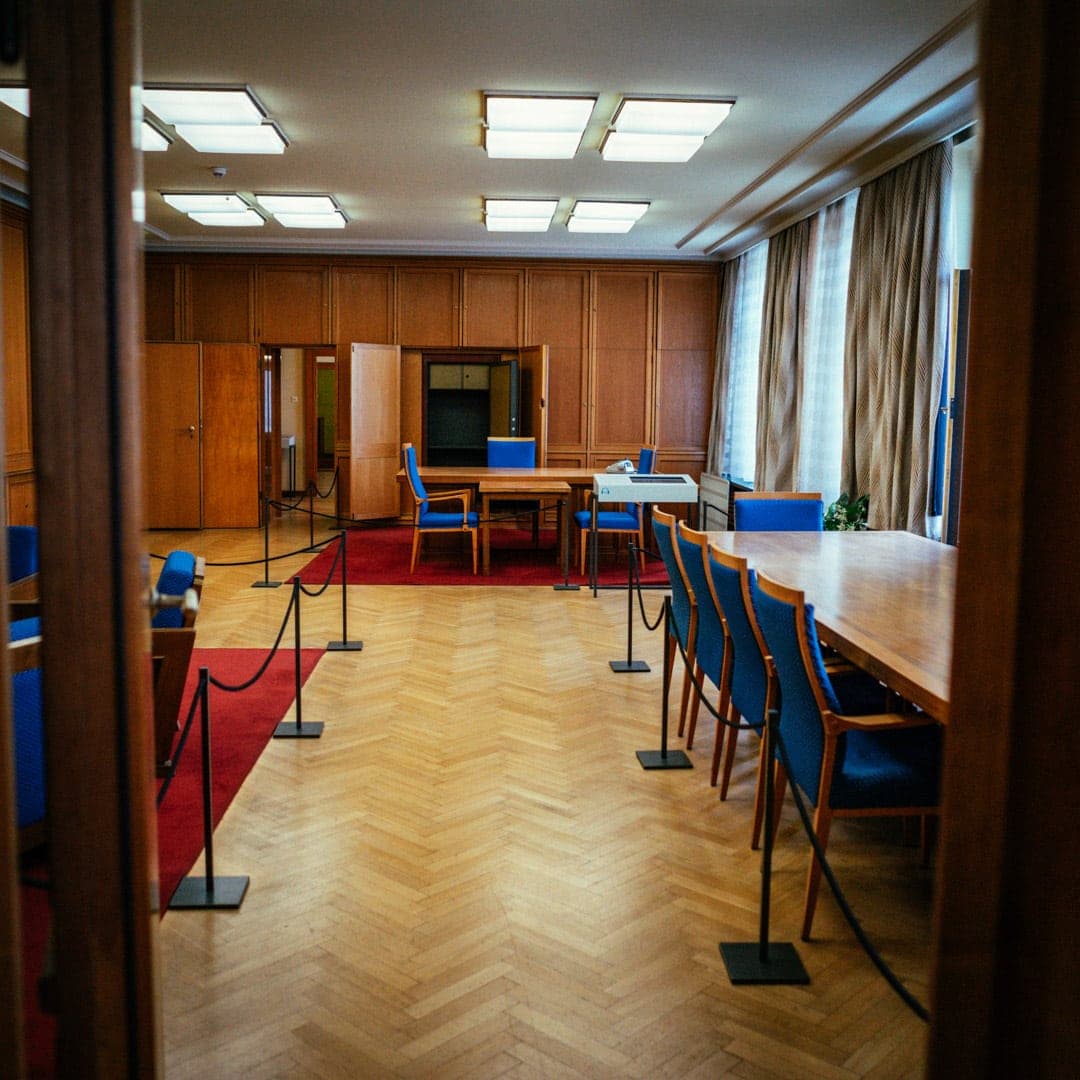
Looking through a doorway into Erich Mielke’s wood-panelled conference room, with its long table and blue chairs, in the Stasi Museum in Berlin

Berlin Experiences/Featured Experiences

Stasi Museum Berlin: Visit Erich Mielke’s Office at the Stasi Headquarters

The ‘Master of Fear’ & head of the East German secret police.

The short answer

The Stasi Museum (Stasimuseum) is in Haus 1 of the former headquarters of East Germany’s Ministry for State Security, at Ruschestraße 103 in Berlin-Lichtenberg, a few minutes’ walk from U5 Magdalenenstraße. Its centrepiece is the office suite of Erich Mielke, the Stasi chief from 1957 to 1989, preserved as he left it, with an exhibition on how the Stasi watched and persecuted East Germans. It is open every day; admission is €12 (reduced €9). Allow 1½–2 hours, and an extra hour for the free Stasi Records Archive exhibition on the same site.

Where
Ruschestraße 103, Haus 1, 10365 Berlin-Lichtenberg
Open
Mon–Fri 10:00–18:00, Sat, Sun and holidays 11:00–18:00
Admission
€12, reduced €9; audio guide €2
Time needed
1½–2 hours
Nearest station
U5 Magdalenenstraße, 7 minutes on foot
Step-free
Yes: side entrance with lift, left of the main door

The story · by Matt Robinson

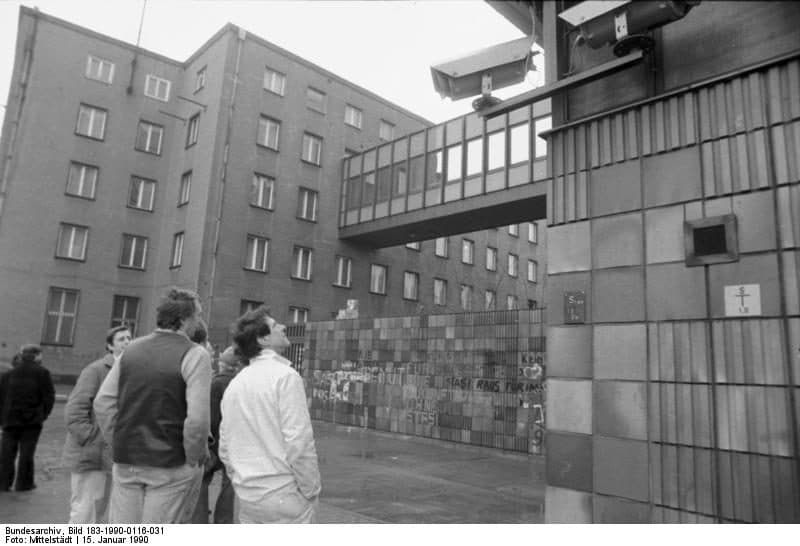
When the offices of the East German secret police were stormed by protestors on January 15th 1990, citizens of the ailing DDR state were finally granted access to the inner sanctum of the most feared organisation in the country – the infamous STASI – or Ministry of State Security, as it was officially known. By November 1990 this facility would reopen as the Forschungs- und Gedenkstätte Normannenstraße – with an exhibition titled ‘Against the Sleep of Reason’.

For more than 40 years, an impenetrable bastion that appeared as nothing more than a black mark on maps of the country – the STASI administrative headquarters was the main address for this terrifyingly bureaucratic behemoth that loomed darkly into the minds of the millions of people who called East Germany home.

The repressive East German secret police, founded in 1950 and based on the Soviet Cheka (predecessor to the KGB and modern FSB), was headed by Berlin-born strongman Erich Mielke – dubbed the ‘Master of Fear’ in the West German press – from 1957 until its demise in 1989.
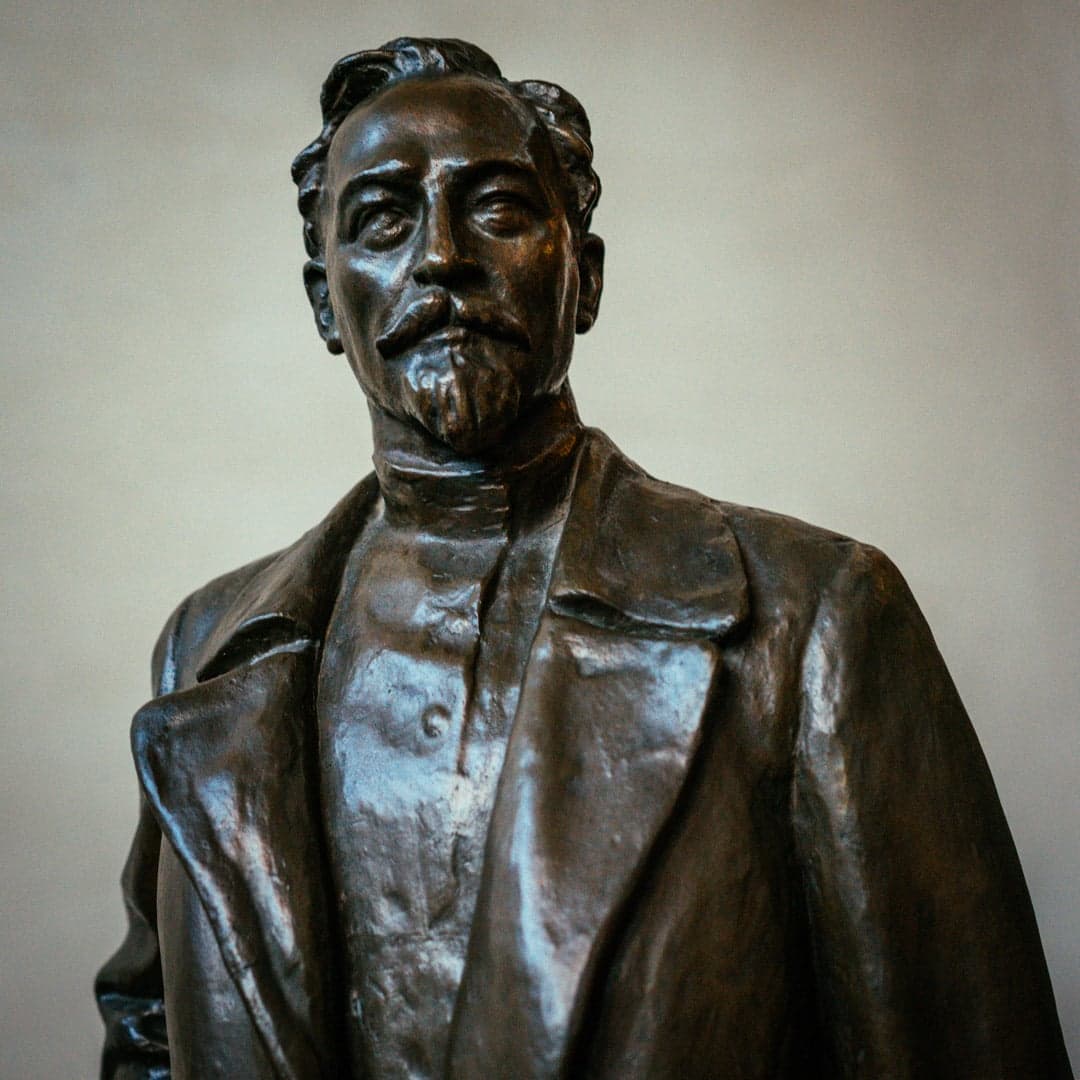
Bronze bust of Felix Dzerzhinsky, founder of the Soviet Cheka, on display in the Stasi Museum in Berlin
Felix Dzerzhinsky, founder of the Cheka, the Stasi’s model.

His office still stands preserved inside Haus 1 of this complex of buildings in Berlin’s eastern district of Lichtenberg. Accessible to visitors and maintained as the star attraction in what is now known as the Stasi Museum.

Haus 1 and the headquarters

This somewhat unremarkable looking collection of buildings sits just off Frankfurter Allee, a continuation of East Germany’s showcase Karl-Marx-Allee boulevard – that connects central Alexanderplatz to Frankfurter Tor, in the direction of the DDR’s Socialist sister states in the East.

Fans of German cinema will likely recognize the exterior of the main building, Haus 1, for its starring role in the Oscar winning 2006 film, The Lives of Others. The fictional retelling of the existential breakdown experienced by a Stasi worker assigned a problematic case – tasked with ruining the relationship between a famous East German writer and his actress wife. The latter an unwilling recipient of advances from a prominent party member who commissioned the assignment. Similarly, the popular German TV series Deutschland ’83 used the premises for genuine location filming.

Not only does the complex include what was the main office (Haus 1) of Stasi chief, Erich Mielke, but the former home of the East German foreign intelligence arm of the organisation (Hauptverwaltung Aufklärung), a functioning cinema, mail processing centre, supermarket, cobblers, and archive building.

The main Stasi archive now resides in buildings 7, 8, and 9 of the site – the official office of the Stasi Records Archive (formerly the BStU) – responsible for the safekeeping and accessibility of all the Ministry of State Security records. A massive 50km of files on site, if organised back-to-back, of around 111km of the files remaining that were collected by the organisation and previously distributed throughout the country.

The largest secret police

At the height of its power, the Stasi is now considered to have been, proportionally, the largest secret police organisation ever in existence.

Larger, by that measure, than even the KGB for the entire Soviet Union. By 1989, this organisation – dubbed the ‘Shield and Sword’ of the ruling Socialist Unity Party – could boast of 91,000 official workers, and an additional 189,000 unofficial collaborators. One for every 90 East German citizens.
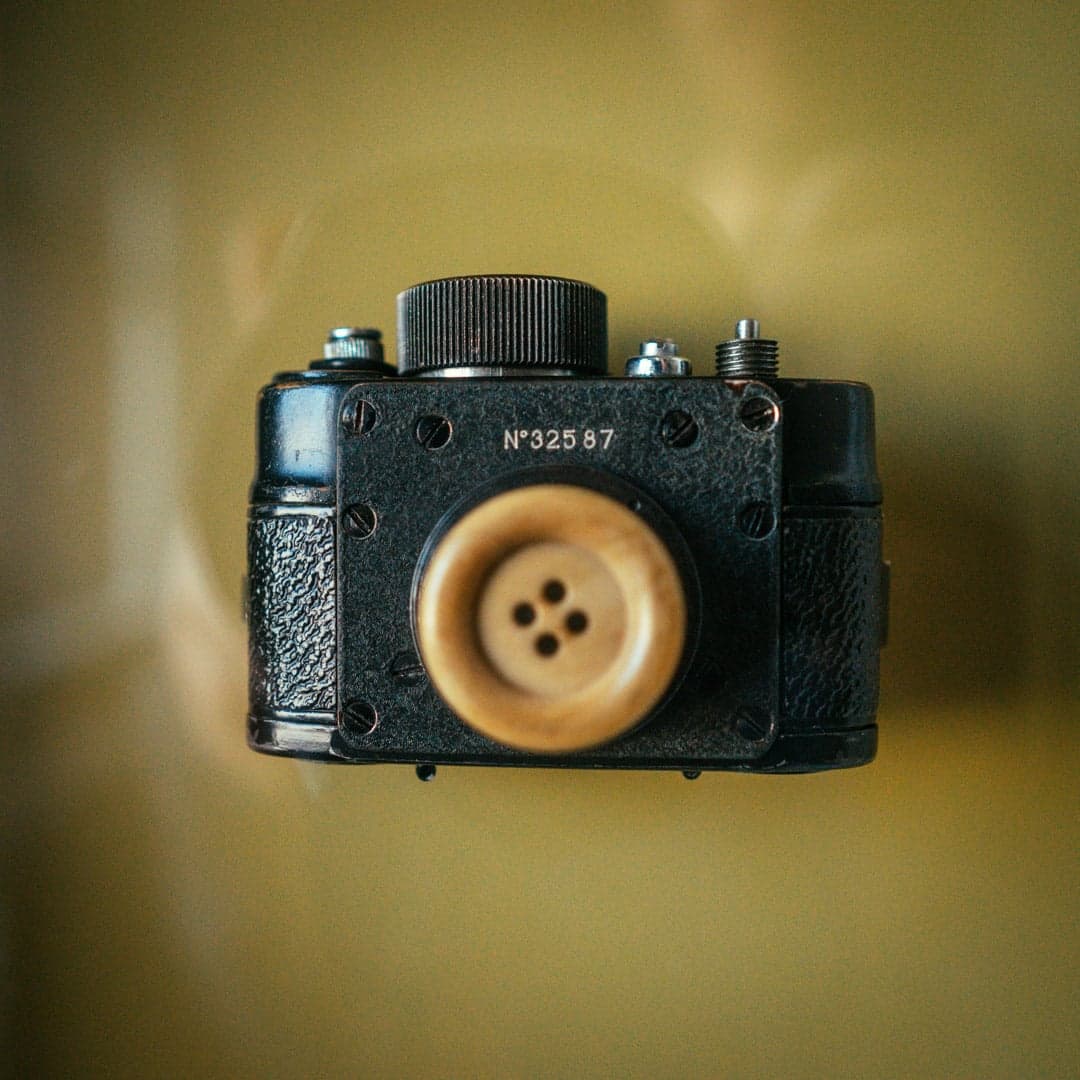
A Stasi spy camera hidden behind a coat button, on display in the Stasi Museum in Berlin-Lichtenberg
A camera hidden behind a coat button.

Although speculation based on the records destroyed at the end of the organisation’s existence puts the number as much higher.

Erich Mielke

At the top of this vast security apparatus sat one man – Erich Mielke. His office is now accessible on the second floor of the Stasi Museum, preserved with its distinctive wood paneling and modest blue fabric covered furniture. A man obviously concerned with his public image, Mielke did much to appear as if he were not taking advantage of his position, by maintaining a humble official domain. Contrary to the reality, as a member of the ruling Politburo, beyond his home he also owned a palatial hunting villa, complete with a movie theater, trophy room, and sixty servants.

When the Berlin Wall finally fell in 1989, Mielke was summoned to the East German parliament to justify his position in response to the recent developments – an event that has gone down in German television history as visually rewarding as the destruction of the Wall. Confronted with the boos and catcalls of the sitting members, he could do little but profess his love for all humanity (“Ich liebe – Ich liebe doch alle – alle Menschen!”). An emperor with no clothes; who would not remain any kind of emperor for much longer.

An emperor with no clothes; who would not remain any kind of emperor for much longer.

Eventually sentenced to prison, Mielke would become the oldest inmate at the Berlin Moabit jail, descending into senility and passing the time by engaging in conversations with imaginary Stasi officers on a telephone given to him by his guards. Similar to the ones that currently sit on his preserved desk.

Doors wide open

Unlike the rest of the Haus 1 building, which is the property of the German Federal government – and maintained as a museum by the same protestors who stormed it in 1990, Mielke’s office has special protected status. Belonging for eternity, rent free, to the German people.
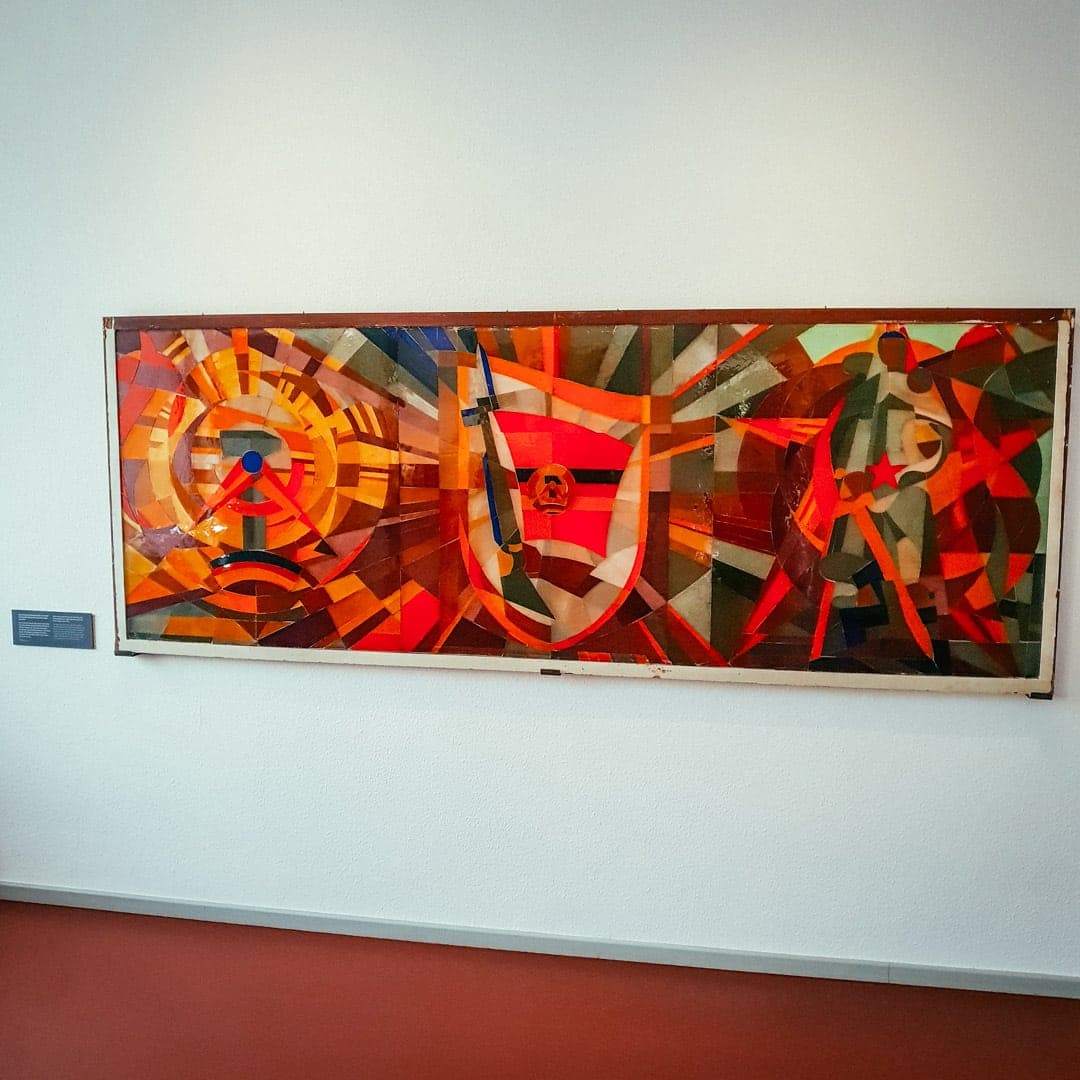
Glass artwork with the SED party emblem, the East German flag and a soldier with a red star, in the Stasi Museum in Berlin
East German state art on the walls of Haus 1.

Exploring the Stasi Museum and Mielke’s office now is a matter of revelling in the unprecedented opportunity to access the East German equivalent of the FBI/CIA, MI5 or KGB offices.

An organisation regarded as ‘secret’ not because of its existence – which was made plain and clear to all its real and perceived enemies – but due to the actions it took and the planning carried out behind closed doors.

Those closed doors that now sit wide open – seven days a week.
The Stasi Museum in detail

People at the gate of the Stasi headquarters on Ruschestraße in Berlin-Lichtenberg on 15 January 1990, with surveillance cameras above the gatehouse
The Ruschestraße gate, watched by cameras, on 15 January 1990. Photo: Bundesarchiv, Bild 183-1990-0116-031 / Mittelstädt, Rainer / CC-BY-SA 3.0

Normannenstraße: the ministry’s headquarters

The Ministry for State Security was founded on 8 February 1950 and moved into a former tax office on the corner of Normannenstraße and Magdalenenstraße. Over the next four decades it swallowed the surrounding blocks. By 1989 the headquarters had 29 buildings around eleven courtyards and up to 7,000 full-time staff, with its own canteens and shops.

Haus 1, the block in the middle, was built in 1960–61 as the minister’s seat: Mielke and the ministry’s leadership worked here until the end. Next to it, Haus 8 was finished in 1984 as the card-index and archive building, and the 13-storey Haus 15 housed the HVA, the foreign intelligence service of Markus Wolf. The museum moved out while Haus 1 was renovated and reopened there with a new permanent exhibition in January 2015; the building has been a listed monument since 2015.

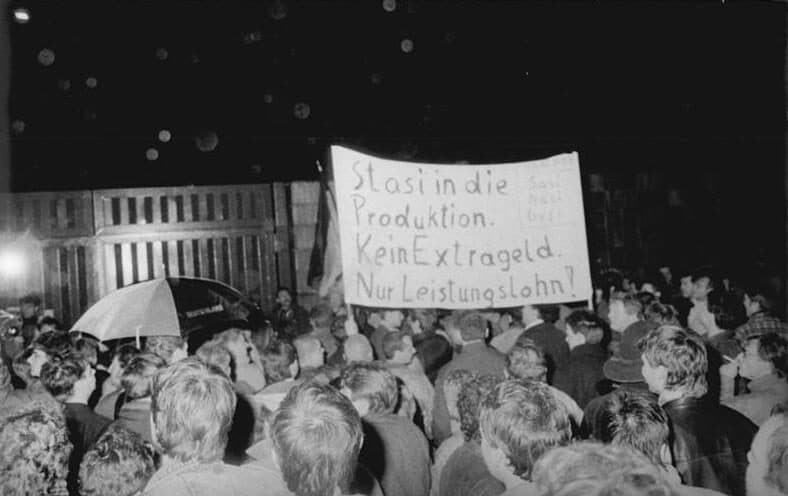
Demonstrators at the gate of the Stasi headquarters in Berlin on the night of 15 January 1990, holding a banner reading ‘Stasi in die Produktion’
Protesters at the gate on the night of 15 January 1990. Photo: Bundesarchiv, Bild 183-1990-0115-026 / Uhlemann, Thomas / CC-BY-SA 3.0

15 January 1990: the storming

After the Wall opened, the ministry was renamed the Office for National Security in November 1989, and its officers began shredding and burning files. From 4 December, citizens occupied the Stasi’s regional offices, starting in Erfurt, to stop the destruction. Berlin’s headquarters held out until 15 January 1990, when the opposition group New Forum called a demonstration at the gates on Ruschestraße.

Thousands came, the gates were opened, and the crowd poured into the courtyards. Most of the damage was done in the canteen and supply buildings; Mielke’s offices were left largely untouched. A citizens’ committee took charge of the site and the files. In the months that followed, activists fought to keep the records open to the people they described; they were made accessible under the Stasi Records Act of 1991.

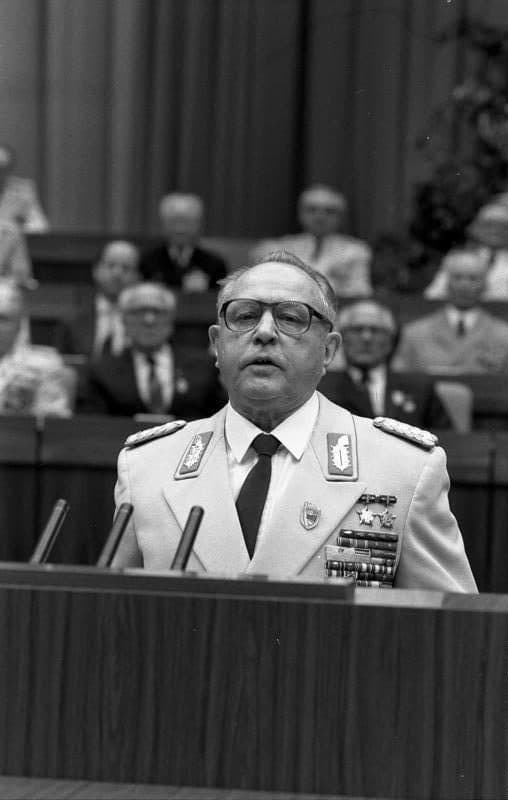
Erich Mielke in uniform speaking at a lectern at a ceremony for the 35th anniversary of the Ministry for State Security, Berlin, February 1985
Mielke speaks at the ministry’s 35th anniversary, February 1985. Photo: Bundesarchiv, Bild 183-1985-0206-042 / Mittelstädt, Rainer / CC-BY-SA 3.0

Erich Mielke: from police killer to minister

Erich Mielke was born in Wedding, Berlin, on 28 December 1907 and joined the Communist Party as a young man. On 9 August 1931 he and Erich Ziemer shot dead two police captains, Paul Anlauf and Franz Lenck, on Bülowplatz, today’s Rosa-Luxemburg-Platz. He fled to the Soviet Union, returned in 1945 and helped build the new East German secret police. He was its minister from 1 November 1957 until 7 November 1989 and a full member of the Politburo from 1976.

After his speech to the Volkskammer on 13 November 1989 he was arrested in December. The files of his ministry were never used to convict him: in 1993 a Berlin court sentenced him to six years for the 1931 murders, relying partly on the original 1930s investigation files. He was released on health grounds in 1995 and died in Berlin on 21 May 2000, aged 92.

Plan your visit

Visiting the Stasi Museum

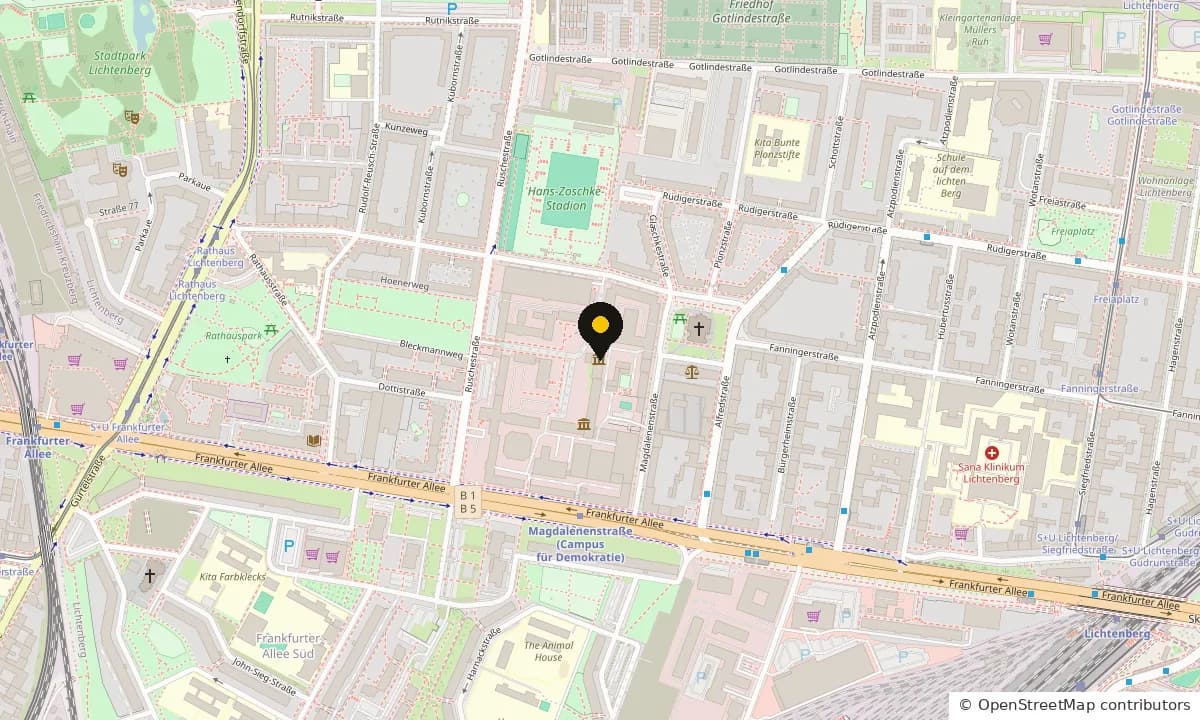
Map of the streets around the Stasi Museum, with a pin on the siteOpen in Google Maps

Ruschestraße 103, Haus 1, 10365 Berlin · Monday–Friday 10:00–18:00; Saturday, Sunday and public holidays 11:00–18:00. Closed 24 and 31 December and 1 January.

Getting there

  • U5Magdalenenstraße550 m · 7 min

    Direct from Alexanderplatz in about 15 minutes. Signed ‘Magdalenenstraße (Campus für Demokratie)’ since December 2025. Take the Ruschestraße exit, walk north up Ruschestraße and turn right through the gateway into the courtyard; Haus 1 is the tall block in the middle.

  • S41S42S8S85U5Frankfurter Allee1 km · 14 min

    From the Ring S-Bahn, either take the U5 one stop east towards Hönow, or walk east along Frankfurter Allee.

What you’ll see

  • Erich Mielke’s office suite on the second floor of Haus 1, kept largely as it was when he left in 1989: wood panelling, blue upholstered furniture, the telephones on his desk and the conference room next door.
  • The permanent exhibition ‘Staatssicherheit in der SED-Diktatur’ (opened 2015), in German and English: how the Stasi was organised, the people who worked for it and the methods it used, with files, photographs, hidden cameras and bugs.
  • The headquarters itself: the courtyards and office blocks of the former ministry, now the ‘Campus für Demokratie’, with the Robert Havemann Society’s free open-air exhibition ‘Revolution und Mauerfall’ on the 1989 revolution.

Tips from a guide

  • Join the public tour in English, Monday to Saturday at 15:00 (German at 13:00): one hour, €5 on top of admission, at most 25 people, so book online. Afterwards you explore the minister’s floor on your own.
  • Without a tour, rent the audio guide (€2; English, German, French, Italian, Spanish, Swedish or Polish). Every text in the exhibition is in German and English.
  • Cross the courtyard to Haus 7 for the free Stasi Records Archive exhibition, and check the Federal Archives’ events page for the evening tours into the archive’s stacks.

Accessibility

The museum describes its exhibition areas as fully accessible. Wheelchair users enter by a separate door with an automatic opener to the left of the main entrance, where a lift goes up to the exhibition floors; a stairlift reaches the foyer and the accessible toilet on the ground floor. Ask the staff in the museum shop if you need help. Magdalenenstraße station has a lift. Only guide dogs are allowed inside.

Timeline

From ministry to museum

  1. 8 Feb 1950The Ministry for State Security is founded; it moves into a tax office on Normannenstraße.
  2. 1 Nov 1957Erich Mielke becomes Minister for State Security.
  3. 1960–61Haus 1 is built as the minister’s headquarters.
  4. 1984Haus 8, the card-index and archive building, is finished.
  5. 1989The Stasi has about 91,000 full-time staff and 189,000 informers.
  6. 13 Nov 1989Mielke tells the Volkskammer: ‘I love all – all people.’
  7. 15 Jan 1990Protesters storm the headquarters on Ruschestraße.
  8. 7 Nov 1990ASTAK opens a research and memorial centre in Haus 1.
  9. 1993Mielke is sentenced to six years for the two police murders of 1931.
  10. Jan 2015The current permanent exhibition opens in the renovated Haus 1.
  11. 17 Jun 2021The Stasi Records Archive becomes part of the Federal Archives.
  12. 14 Dec 2025Magdalenenstraße station gains the name ‘Campus für Demokratie’.

See it with a historian

Tours that stop at the Stasi Museum

The museum shows you the minister’s floor; a guide can walk you round the whole headquarters and explain what went on in each building, and how the files survived.

The Secret Police Tour
One Hour1 Hour

The Stasi Headquarters Tour

Private 1-hour walking tour of the former Stasi headquarters for up to 10 people. Starts at Magdalenenstraße U-Bahn station (U5).

€300up to 10
View Tour

Why this tour

The former Stasi headquarters in Lichtenberg, Mielke’s office and the archive of the files.

See the Stasi Headquarters Tour

Questions visitors ask

Frequently asked questions

Where is the Stasi Museum in Berlin?

In Haus 1 of the former Stasi headquarters at Ruschestraße 103, 10365 Berlin-Lichtenberg, just north of Frankfurter Allee. The nearest station is U5 Magdalenenstraße, about 7 minutes’ walk, and the U5 takes about 15 minutes from Alexanderplatz.

How much does the Stasi Museum cost?

Admission is €12, reduced €9 (students, trainees, jobseekers, disabled visitors and pensioners) and €6 for children from 13. The audio guide costs €2 and the public guided tour €5 on top of admission.

What are the Stasi Museum’s opening hours?

Monday to Friday 10:00–18:00, and Saturday, Sunday and public holidays 11:00–18:00. It is closed on 24 and 31 December and 1 January, and occasionally on other single days announced on its website.

How long do you need at the Stasi Museum?

Allow 1½–2 hours for the exhibition and Mielke’s rooms, or about 2½ hours with the one-hour public tour. Add an hour if you also visit the free archive exhibition in Haus 7.

Are there tours of the Stasi Museum in English?

Yes. A public tour in English runs Monday to Saturday at 15:00 (in German at 13:00), costs €5 plus admission and takes up to 25 people, so it is worth booking online. Groups can book their own guide.

Can I see my Stasi file?

Anyone can apply to the Stasi Records Archive, part of the Federal Archives, to see whether a file was kept on them. Application forms are available at the museum’s ticket desk and on the archive’s website.

What is the difference between the Stasi Museum and Hohenschönhausen?

The Stasi Museum is the ministry’s headquarters, where the surveillance was run; Hohenschönhausen was its main remand prison, where suspects were held and interrogated. The prison is about 30 minutes away by bus, and the two make a good pair.

Was The Lives of Others filmed at the Stasi Museum?

The exterior of Haus 1 appears in the 2006 film, which won the Oscar for best foreign-language film in 2007, and the series Deutschland ’83 also filmed on the site.

Keep exploring

More Featured Experiences.

Every site we write about — 56 landmarks, museums, memorials and lesser-known corners of Berlin. See the full index →

01Walk Through The Brandenburg Gate02Explore The State Museums On Museum Island03Visit The Berlin TV Tower – The Fernsehturm04Cross The Cold War Border At Checkpoint Charlie05Visit The Site Of Adolf Hitler’s Führerbunker06Explore The Reconstructed Berlin Palace07Visit The Reichstag Cupola At Night08Explore The Forum Fridericianum09Shop At The Humboldt University Book Sale10Journey Into The Memorial To The Murdered Jews Of Europe11Step Inside The Neue Wache12Explore The Former Jewish Quarter – Spandauer Vorstadt13Visit The Remains Of The Berlin Wall14Walk Across The Bridge Of Spies15Explore The Topography Of Terror16Climb The Prussian Victory Column – The Siegessäule17Enter The Palace Of Tears – The Tränenpalast18Step Inside The Berlin Olympic Stadium20Walk Along Karl Marx Allee21Visit The Oldest Church In Berlin – The Nikolaikirche22Explore The Berliner Dom23Visit The Grave Of Frederick The Great24Walk Through The Ruins Of Anhalter Bahnhof25Stand On The Platz Des Volksaufstandes26Visit The German Resistance Museum27Visit The Soviet War Memorial In The Tiergarten28See The Georg Elser Memorial On Wilhelmstrasse29Step Inside The Kaiser Wilhelm Gedächtnis Kirche30Visit The Gleis 17 Memorial31Visit The Schloss Charlottenburg Mausoleum32Climb The Französischer Dom at Gendarmenmarkt33Explore The Interbau – IBA 5734Explore The Otto Weidt Workshop35Visit Cecilienhof – Site Of The Potsdam Conference36Visit The Stasi Prison In Hohenschönhausen37Spend The Day At Tempelhof Airport38Ride The Fastest Elevator In Europe39Visit The Soviet War Memorial In Treptower Park40Visit The Sachsenhausen Concentration Camp Memorial41Visit The Ravensbrück Concentration Camp Memorial42Visit Karlshorst – The Site Of The German Surrender43Visit The Socialists Cemetery – Zentralfriedhof Friedrichsfelde44Visit The Soviet War Memorial In Pankow45Visit the Seelow Heights Memorial46Visit The Commonwealth War Cemetery47Cross The Bösebrücke At Night48Explore The Allied Museum In Dahlem49Explore The Spandau Citadel50Visit The Brandenburg T4 Euthanasia Memorial51Visit The Wannsee Conference House52Visit The Jewish Museum53Visit The Jewish Cemetery In Weissensee54Walk Along The East Side Gallery55Explore The Volkspark Friedrichshain Flak Tower56Head Up The Teufelsberg