Skip to content
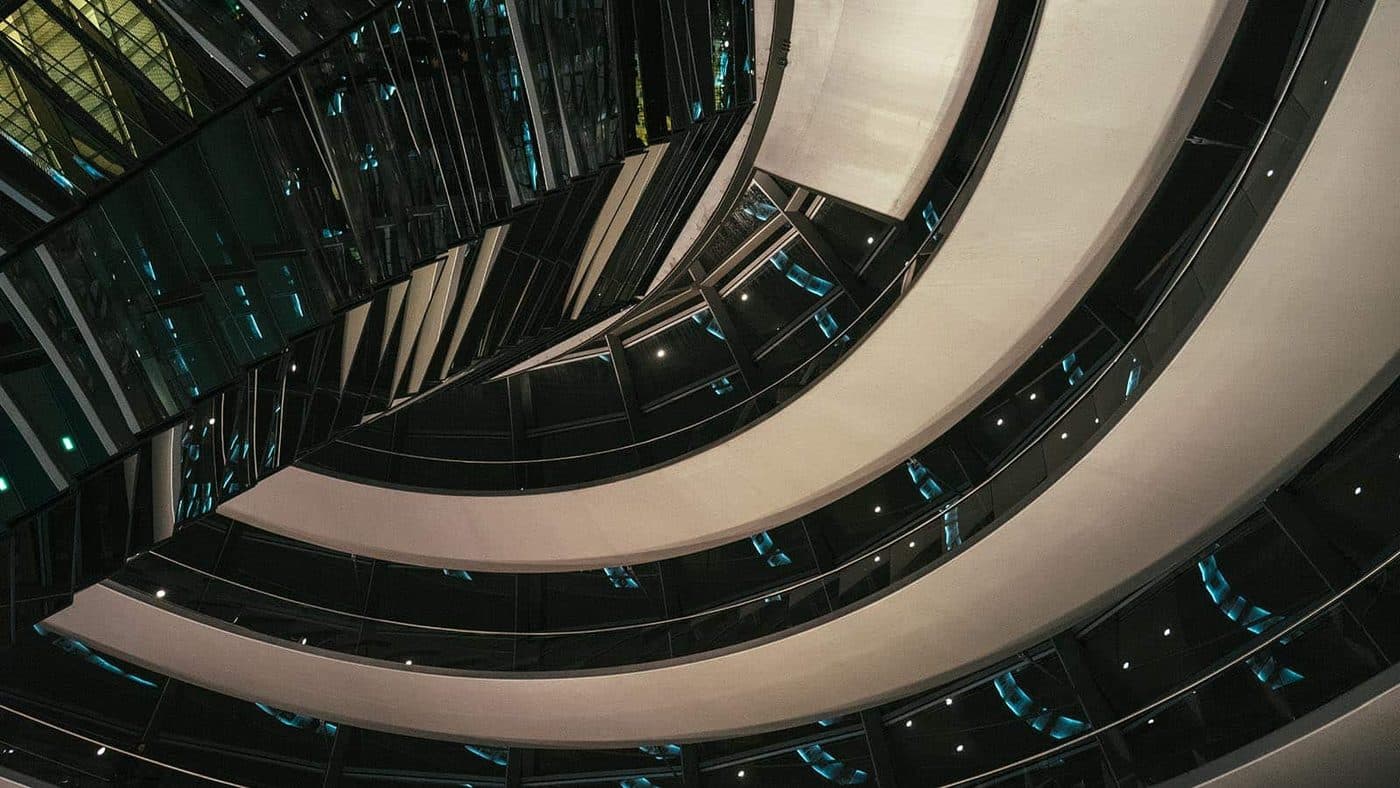
Inside the Reichstag dome in Berlin at night: the spiral visitor ramps curving around the mirrored cone

Berlin Experiences/Featured Experiences

Reichstag Dome at Night: How to Visit the Glass Cupola in Berlin

The illuminated summit of Germany reimagined.

The short answer

The Reichstag dome (Reichstagskuppel) is the glass cupola Norman Foster put on top of the Reichstag, home of the German Bundestag, at Platz der Republik 1 by the Tiergarten. Anyone can go up: it is free, but you must register in advance on bundestag.de with the name and date of birth of every visitor, then bring photo ID and pass an airport-style security check. Admission runs every quarter of an hour, with the last at 21:45, so it is one of the few Berlin viewpoints you can visit after dark. Allow 60–90 minutes including security; the ramps up and down the dome take about 20–30 minutes.

Where
Platz der Republik 1, 11011 Berlin, west entrance of the Reichstag
Open
Daily, entry every 15 minutes, last admission 21:45
Admission
Free, with advance registration on bundestag.de
Time needed
60–90 minutes, including security
Nearest station
U5 Bundestag, 4 minutes on foot
Step-free
Yes: entrance West C, lifts to the roof, ramps in the dome

The story · by Matt Robinson

The sun sets on the Reichstag like any other building. Except inside, a colossal fountain of mirrors reflects the fading light across patented-blue plenary seating.

Public access to the glass-and-steel cupola that contains this unique tower on top of the building is possible by prior online registration, affording visitors a bird’s-eye view of the plenary chamber and official proceedings that take place there throughout the week.

In contrast to the impenetrable Wilhelminian Neo-Baroque/Renaissance body of the structure with its ornamental majesty, the unadorned cupola offers a clear view of the parliamentary chamber of the organisation – the Bundestag – based here.

The symbolism of this disharmony could not be more apparent; that which is old and traditional forms the base, but the defining summit of the structure is its forthright and honest dome. Lacking the imperial signifiers of Prussia or the imposing features of dictatorship that found their place in 20th century Germany, instead there is the simple candour of glass and steel.
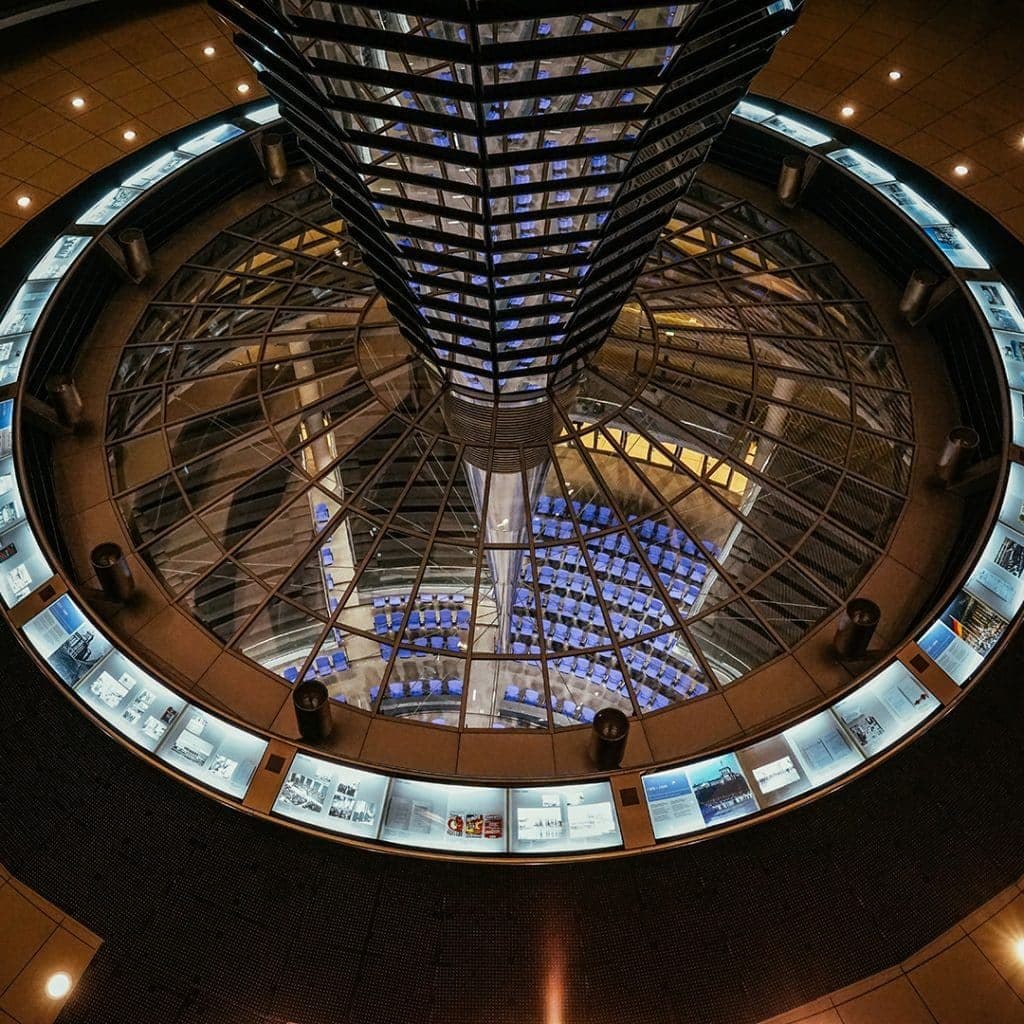
Looking down the mirrored cone inside the Reichstag dome in Berlin to the blue seats of the Bundestag plenary chamber
The mirrored cone, looking down into the plenary chamber.

No other building but the Reichstag better stands to represent the troubled evolution of the German nation – and the distinctly introspective current political climate of the country that now crowns it.

A beacon after dark

Due to the building’s position in the city, and proximity to some of Berlin’s major historical sites, the roof and cupola of the structure also offer an exceptional 360º panorama of the city skyline and the landmarks nearby.
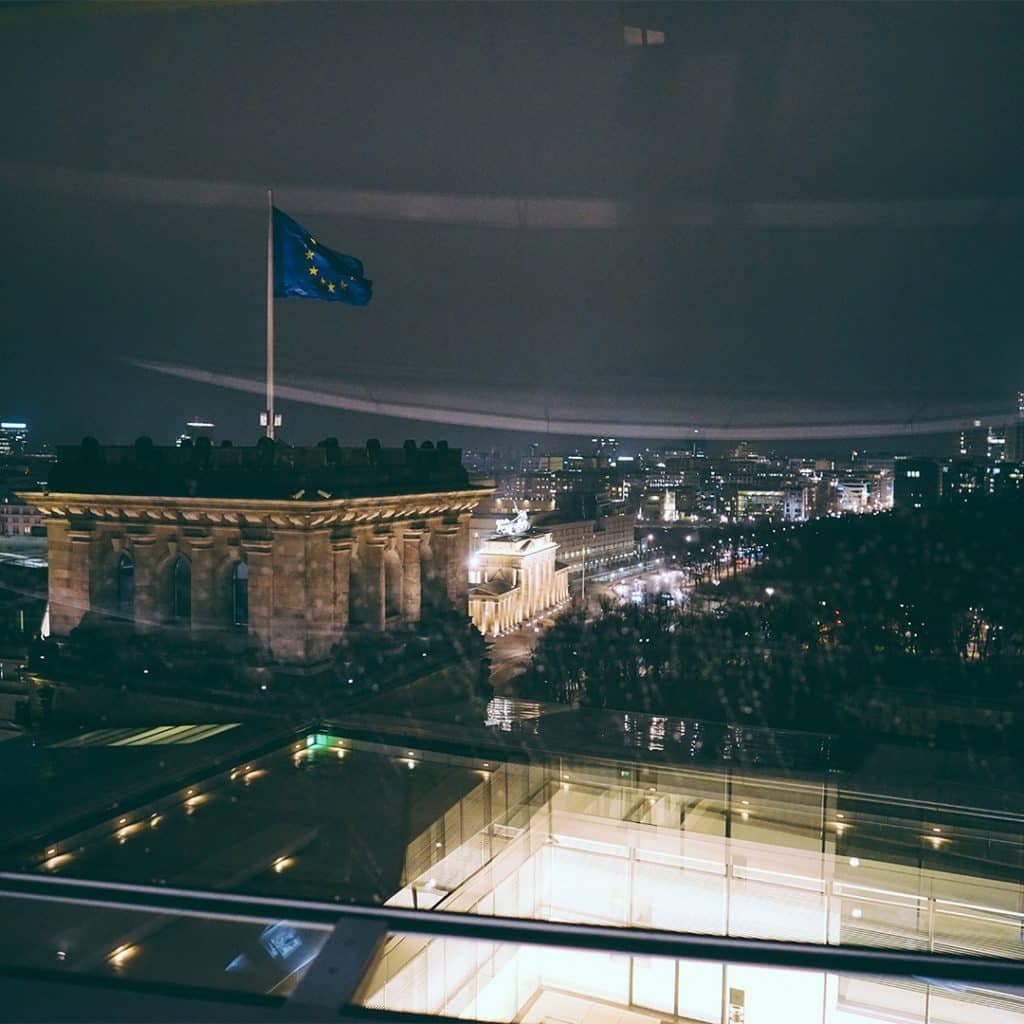
View from the Reichstag roof at night towards Pariser Platz and the Brandenburg Gate, with the EU flag on a corner tower
The view from the roof towards Pariser Platz at night.

Notably, after the sun has set, however, the defining glass dome takes on a more enchanting quality, as a beacon atop the building, surrounded by the darkness of the former royal hunting ground – the Tiergarten – on one side, and the Band des Bundes (the Federal Band) of the German government district (Regierungsviertel), and slow-moving River Spree, on the other.

As one of Imperial Germany’s main democratic institutions, the original Reichstag (Imperial Parliament) – from which the building gets its name – served as the lower parliament of the country. The members of this parliament vested with legislative powers to introduce laws and amendments to the country’s political system; although at that time still subservient to the monarch – William II – who ruled the country from 1888 until 1918. The construction of the Reichstag building from 1884 would take place under the reign of three successive Emperors. William I, Frederick III, and William II. The latter was so averse to the parliament that after it was finally completed under his rule he took to referring to it as the ‘imperial monkey house’ (Reichsaffenhaus).

As surely as every king needs a crown; every circus needs a tent.

As surely as every king needs a crown; every circus needs a tent.

Wallot’s parliament

Completed in 1894, twenty-three years after the formation of the German Empire, the Reichstag building was designed by Paul Wallot, a relatively unknown German-speaking architect of French Huguenot descent. Wallot’s concept – inspired by the Memorial Hall in Philadelphia – was chosen as the winning design in a competition held by a parliamentary commission. Like the present day form of the building, this original design also featured a glass domed roof – considered revolutionary at the time – that ensured natural light would illuminate the proceedings below.

The proposed location of the building was however at that time occupied by a palatial residence, owned by a Polish-Prussian aristocrat – unaware of the plans to dehouse him and entirely reluctant to part with his established position until given a prominent place of resettlement.
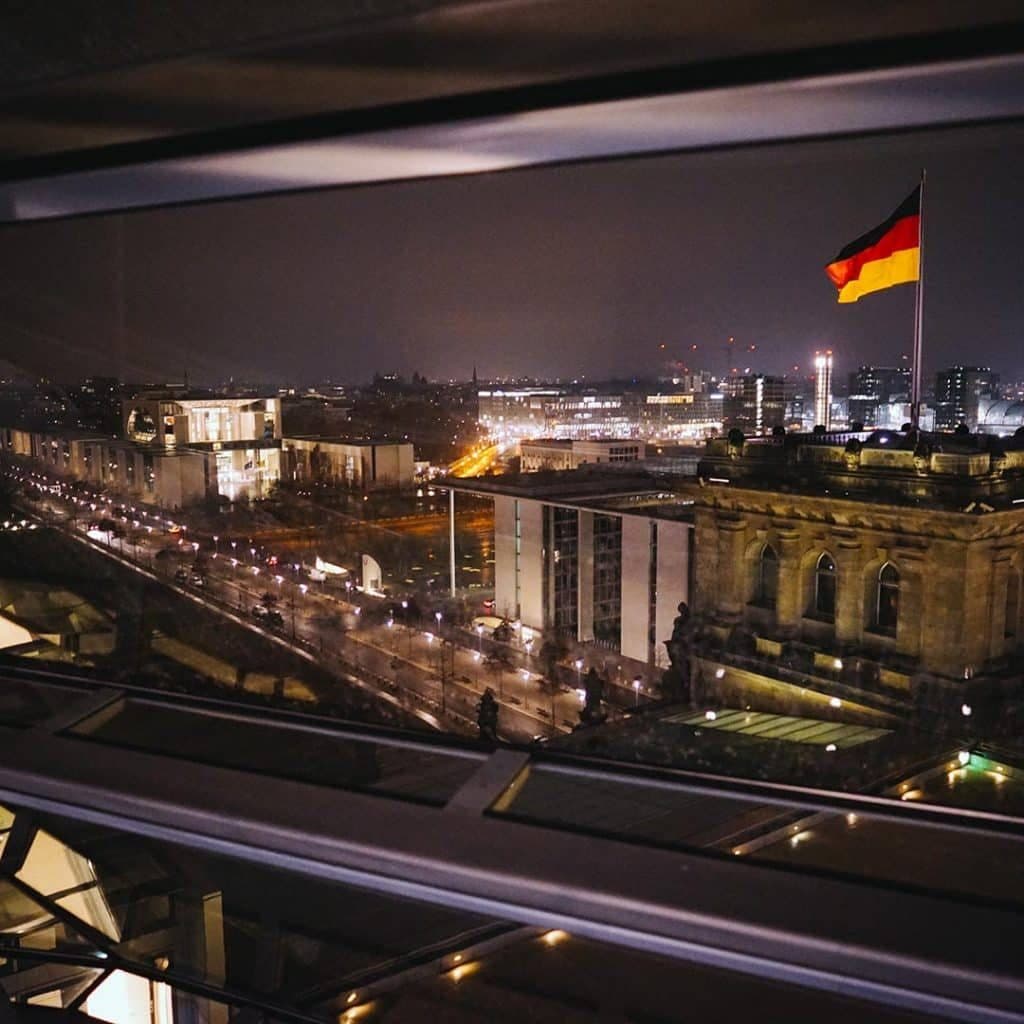
The Federal Chancellery and the German flag on the Reichstag seen at night from inside the Reichstag dome, Berlin
The Chancellery and the flag, seen from the dome.

While now considered centrally located in the city of Berlin, the Reichstag when completed in 1894 was actually situated on the edge of the city – beyond the line of the old customs wall, west of the Brandenburg Gate. The land around it had only been incorporated into the city in 1861, and the Tiergarten park in 1881.

A hat that lets the rain in

From above, the Reichstag resembles a figure of eight, with two inner courtyards visible from the roof. As the sun moves around the building during the day, a giant automatic reflector inside the glass cupola tracks its path to block any unwanted solar gain in the main parliamentary chamber. Not only does the cupola provide ventilation for the plenary – with the peak open to the sky – but also includes a walkway that visitors can take around the inside of the dome to reach the oculus roof.
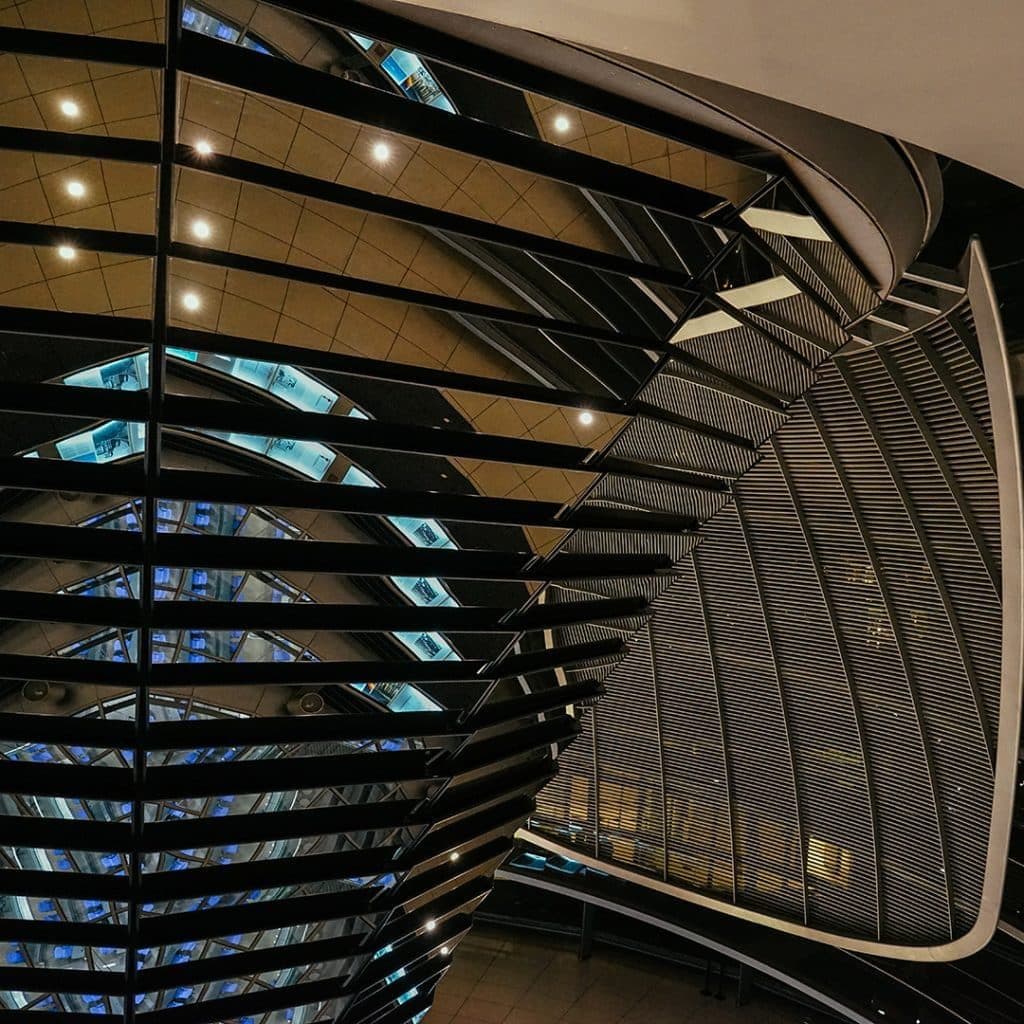
The visitor ramp spiralling up beside the mirrored light cone inside the glass dome of the Reichstag, Berlin
The ramp climbs beside the cone towards the open top.

Prussian king, Frederick the Great, famously said that a crown is simply a hat that lets the rain in. The cupola crowning the Reichstag is designed to do just that.

Symbolically open to the elements and as a pathway to the stars.

Like the Pantheon in Rome; or the similar Neue Wache in Berlin on nearby Unter den Linden; the cupola on the Reichstag – and the building itself – is now open to the world – a skylit edifice that offers the sun, rain, and the wind – not to the gods or a mother mourning her son – but to the beating heart of political life in Germany.
The Reichstag in detail

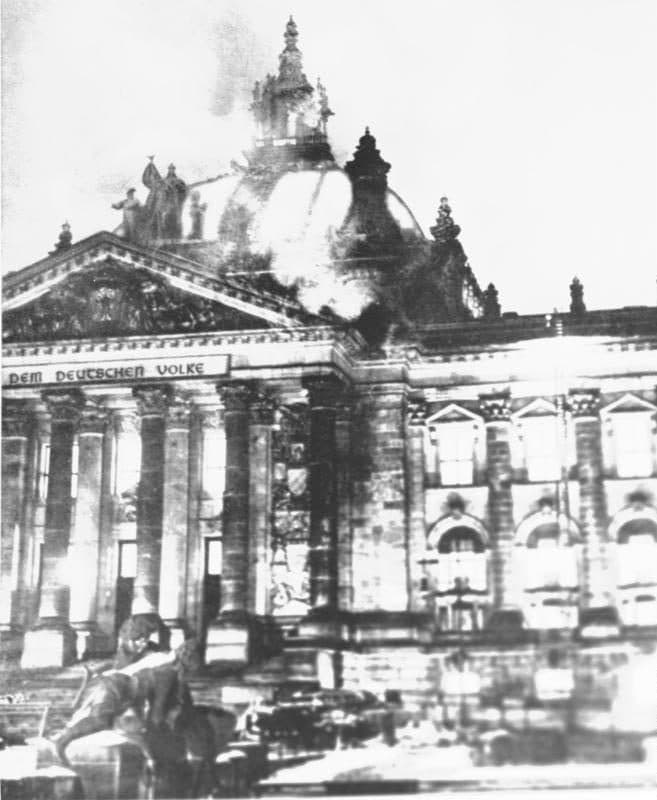
The Reichstag building in Berlin on fire on the night of 27 February 1933, with flames in the dome
The Reichstag burning, 27 February 1933. Photo: Bundesarchiv, Bild 183-R99859 / CC-BY-SA 3.0

The fire of 27 February 1933

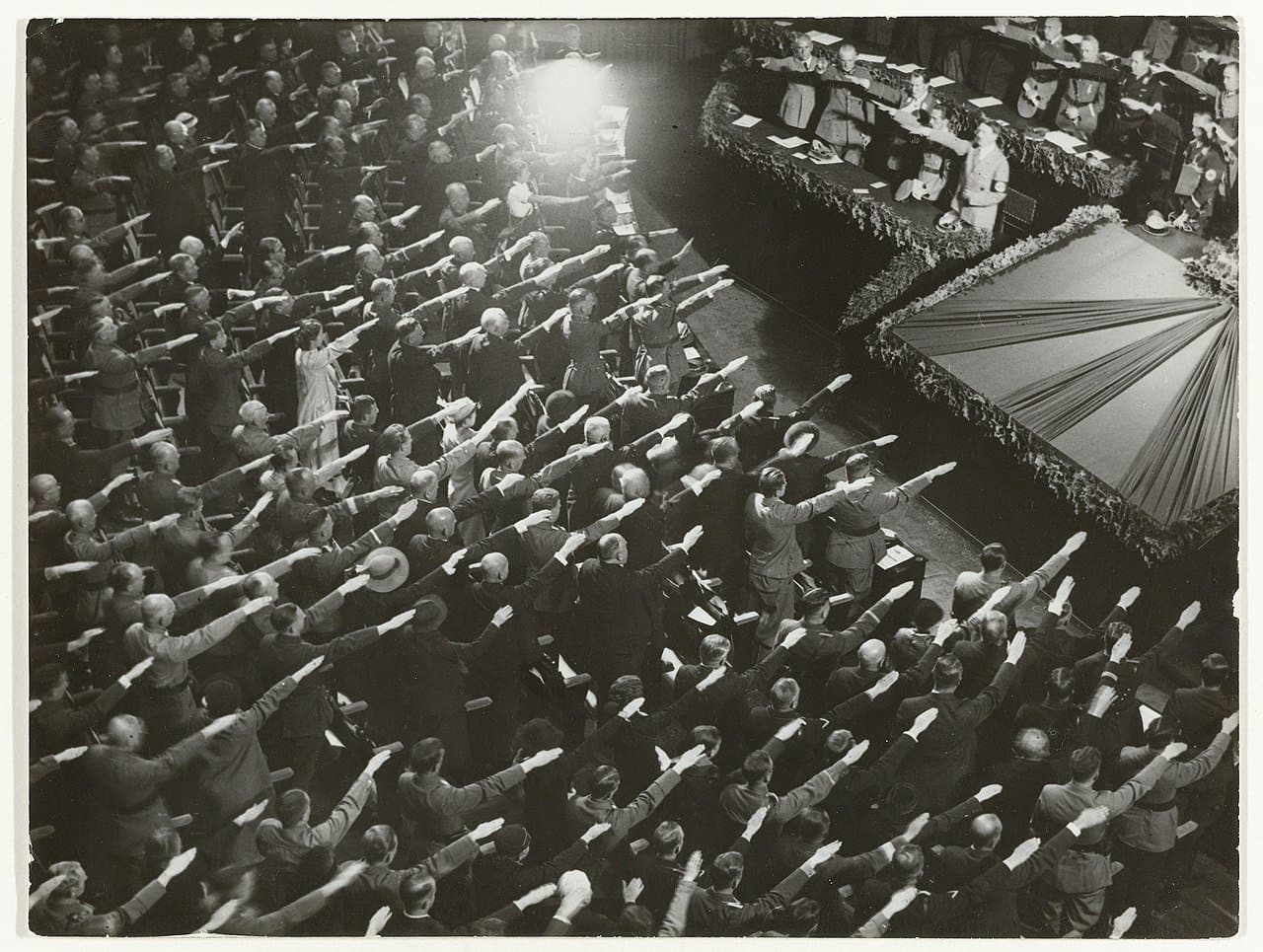
On the evening of 27 February 1933, four weeks after Hitler became Chancellor, the Reichstag caught fire. The plenary chamber burned out and flames broke through Wallot’s glass dome. Police arrested a young Dutch communist, Marinus van der Lubbe, inside the building. The Nazis called the fire the signal for a communist uprising, and the next day President Hindenburg signed the Reichstag Fire Decree, suspending civil liberties and opening the way for mass arrests.

At the trial in Leipzig later that year, the communist leaders accused with van der Lubbe were acquitted, but he was sentenced to death and executed in January 1934; Germany set the verdict aside in 2008. Who else, if anyone, was involved is still argued over. Parliament never sat in the building again under the Nazis: the rubber-stamp Reichstag met in the Kroll Opera House across the square.

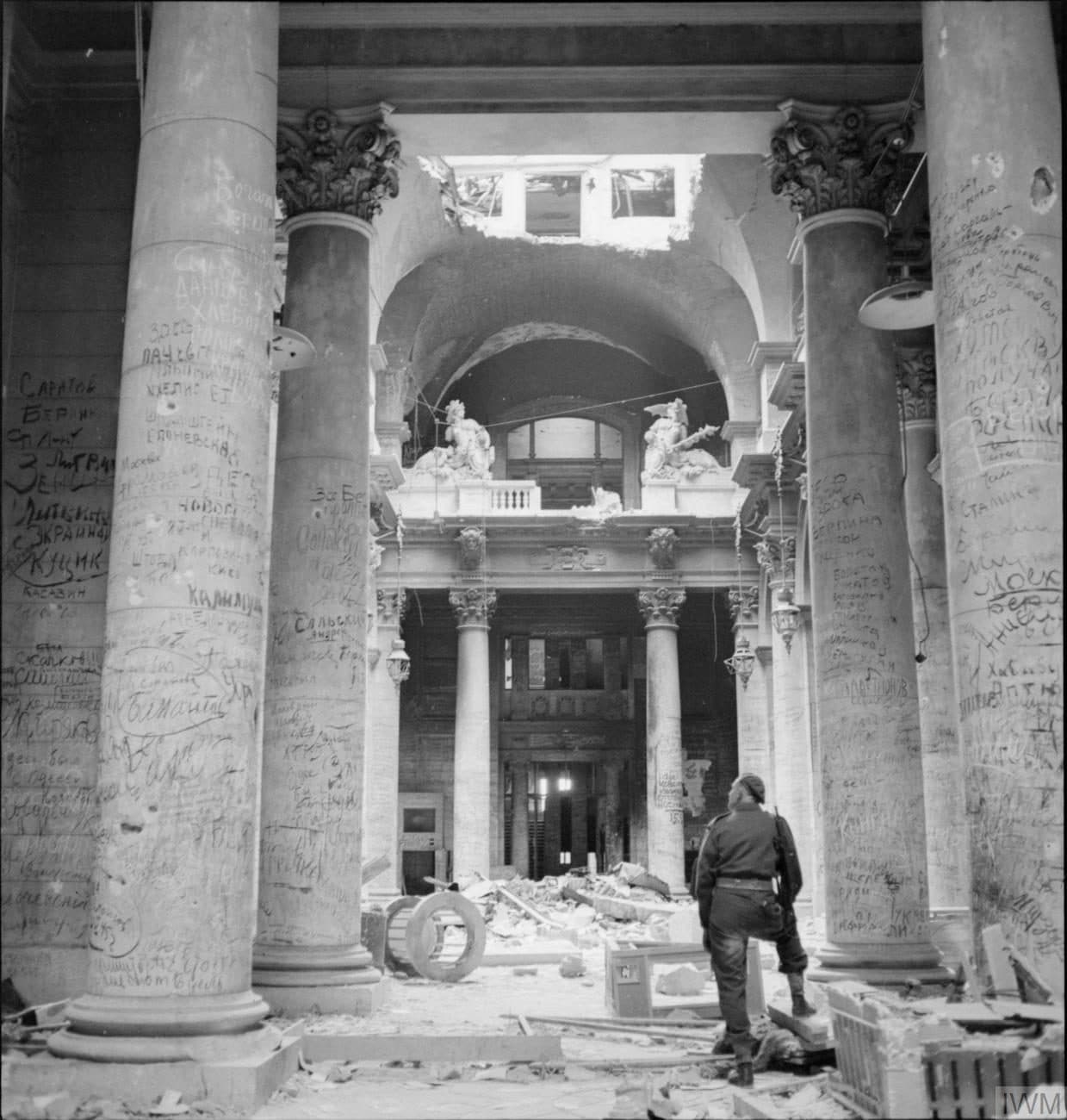
A British soldier among the ruins of the Reichstag in Berlin in 1945, looking at columns covered in Soviet soldiers’ graffiti
Soviet graffiti on the columns of the ruined Reichstag, summer 1945. Photo: Sgt Hewitt, No 5 Army Film & Photographic Unit / Public domain, via Wikimedia Commons

1945: the battle and the Soviet graffiti

Empty since the fire, the Reichstag was still the building the Red Army saw as the symbol of Hitler’s Germany. Soviet troops fought their way in from 29 April 1945, raised a red banner on the roof late on 30 April and took the last defenders on 2 May; Yevgeny Khaldei’s famous flag photograph was staged that day. Afterwards soldiers covered the walls in charcoal and chalk: names, home towns, dates and messages such as “Hitler kaputt”.

When Norman Foster stripped out the 1960s panelling in the late 1990s, much of the graffiti reappeared. It was kept as a trace of history; a few racist and sexist inscriptions were removed in agreement with Russian diplomats. The graffiti is inside the building, not on the dome route, so you see it on the Bundestag’s free guided tours rather than on a dome visit.

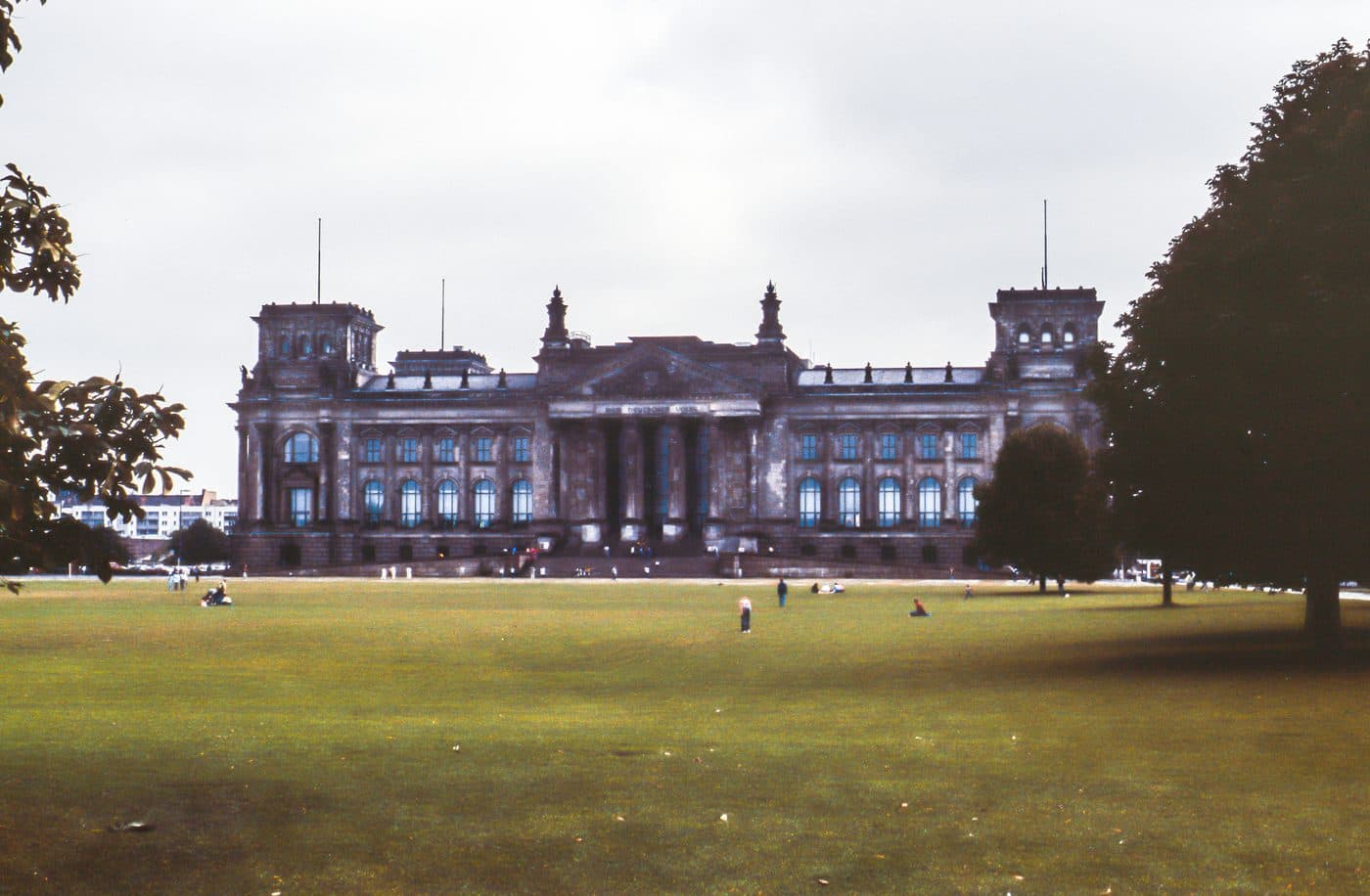
The Reichstag in Berlin around 1990, without a dome after Paul Baumgarten’s 1960s rebuilding, seen across the lawn of Platz der Republik
The Reichstag without its dome, around 1990. Photo: Dietmar Rabich / CC BY-SA 4.0, via Wikimedia Commons

From ruin to Foster’s dome

The shell of Wallot’s dome was blown up on 22 November 1954. Between 1961 and 1973 Paul Baumgarten rebuilt the Reichstag for West Germany without a dome, though the 1971 Four Power Agreement barred plenary sessions in West Berlin, and the Berlin Wall ran along the back of the building. On 4 October 1990, the day after reunification, the all-German parliament met here, and on 20 June 1991 the Bundestag voted 338 to 320 to move from Bonn.

Norman Foster won the competition for the conversion with a design that had no dome at all; the cupola was added at the politicians’ insistence in 1995, weeks before Christo and Jeanne-Claude wrapped the building. Foster’s dome is 38 metres wide and 23.5 metres high, and its cone carries 360 mirrors. The keys were handed over on 19 April 1999, and the Bundestag has met beneath it since September 1999.

Plan your visit

Visiting the Reichstag dome

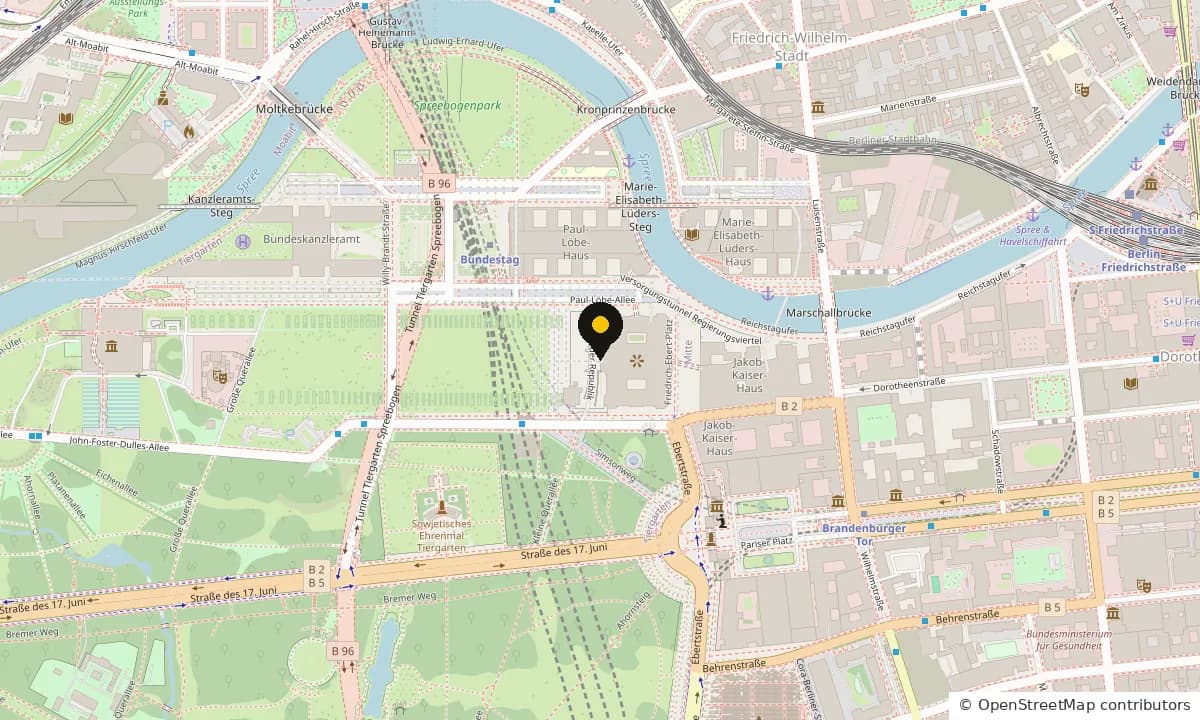
Map of the streets around the Reichstag dome, with a pin on the siteOpen in Google Maps

Platz der Republik 1, 11011 Berlin · Daily, entry every 15 minutes, last admission 21:45; closed 24 Dec and from 16:00 on 31 Dec

Getting there

  • U5Bundestag300 m · 4 min

    Take the exit towards the Reichstag and walk south across Paul-Löbe-Allee to the west front.

  • Bus 100Reichstag/Bundestag200 m · 3 min

    The stop is on Scheidemannstraße, just south of the building; the 100 runs between Alexanderplatz and Zoologischer Garten.

  • S1S2S25S26U5Brandenburger Tor650 m · 9 min

    Walk through the Brandenburg Gate and north up Ebertstraße and Scheidemannstraße to Platz der Republik.

What you’ll see

  • The plenary chamber of the Bundestag from above, through the glass floor of the dome, with the mirrored cone that throws daylight down onto the blue seats.
  • Two spiral ramps, about 230 metres up and down, rising to a viewing platform under the open top of the dome, with a free audioguide pointing out the sights.
  • From the roof terrace: the Chancellery, the Tiergarten, the Brandenburg Gate, Potsdamer Platz, the Spree and, after dark, the lit-up government quarter.

Tips from a guide

  • Book as soon as your dates are within reach: requests open only for the current and the following month, and you must wait for the confirmation email. No booking? Try the service centre on Platz der Republik for a slot at least two hours later.
  • Choose a slot just after sunset for the view at night; in winter that can be before 17:00. Bring the original photo ID of everyone in the group (copies are refused) and leave large bags behind: there is no left luggage.
  • Check bundestag.de on the day: the dome can close at short notice, and a closed dome still leaves the roof terrace open.

Accessibility

The Reichstag is accessible: wheelchair users, visitors with prams and elderly or frail visitors use the entrance below and to the right of the west portal (West C), and lifts reach the roof terrace. The dome is climbed by gently sloping ramps rather than stairs. Wheelchairs can be borrowed, and there are audioguides for blind visitors (with tactile models) and a sign-language video guide. Check the BVG website for lift status at U5 Bundestag.

Timeline

From imperial parliament to glass dome

  1. 9 Jun 1884Wilhelm I lays the foundation stone of Paul Wallot’s parliament.
  2. 1894The Reichstag is finished, crowned by a dome of steel and glass.
  3. 9 Nov 1918Philipp Scheidemann proclaims the republic from a Reichstag balcony.
  4. 27 Feb 1933Fire guts the plenary chamber; civil liberties are suspended the next day.
  5. 30 Apr 1945Red Army soldiers raise a red banner on the roof.
  6. 22 Nov 1954The remains of Wallot’s dome are blown up.
  7. 1961–73Paul Baumgarten rebuilds the Reichstag, without a dome.
  8. 4 Oct 1990The first parliament of reunified Germany meets in the building.
  9. 20 Jun 1991The Bundestag votes 338 to 320 to move from Bonn to Berlin.
  10. 24 Jun–7 Jul 1995Christo and Jeanne-Claude wrap the Reichstag in silver fabric.
  11. 19 Apr 1999Norman Foster hands over the rebuilt Reichstag and its glass dome.

See it with a historian

Tours that stop at the Reichstag dome

The dome’s audioguide names the buildings; a guide tells you what happened in them, from the 1933 fire to the Soviet flag and the Wall behind the building.

The sunset side of Berlin, with the Reichstag lit up among the evening’s stops.

The Berlin At Night Tour
Half Day3 Hours

The Berlin At Night Tour

Private 3-hour evening walking tour of Berlin's lit-up historic centre for up to 10 people. Starts at Pariser Platz, Brandenburg Gate.

€450up to 10
View Tour

From the Reichstag fire of 1933 to the bunker in 1945, in the Nazi government district.

The Third Reich Tour
One Hour1 Hour

The Third Reich Tour

Private 1-hour walking tour of the Nazi government district for up to 10 people. Starts at Pariser Platz by the Brandenburg Gate.

€200up to 10
View Tour

One hour around the Reichstag, the Brandenburg Gate and the Tiergarten to get your bearings.

The Berlin Intro Tour
One Hour1 Hour

The Berlin Intro Tour

Private 1-hour walking tour of Berlin's main historic sites for up to 10 people. Starts at Pariser Platz by the Brandenburg Gate.

€200up to 10
View Tour

Questions visitors ask

Frequently asked questions

Is the Reichstag dome free?

Yes. Visiting the dome and roof terrace costs nothing, but you must register in advance on bundestag.de. Websites that sell ‘Reichstag tickets’ are selling tours or services, not admission.

How far in advance should I book the Reichstag dome?

As early as the system allows: requests open only for the current month and the next, and popular evening slots go first. Your visit is booked only when the Visitors’ Service confirms it by email.

Can I visit the Reichstag dome without booking?

Sometimes. The service centre on Platz der Republik, in front of the building, gives out any free places in person, at least two hours before the slot and up to two days ahead. Bring photo ID; in winter it is open 08:00–18:00 on weekdays and 10:00–18:00 at weekends.

Can you visit the Reichstag dome at night?

Yes. Admission runs every quarter of an hour until 21:45, so you can go up after dark all year. In winter the sun sets before 17:00, so even an early-evening slot gives you the city lights.

What ID do I need for the Reichstag?

Every visitor aged 16 or over needs a valid official photo ID, such as a passport or national identity card, and the details must match your registration. Teenagers of 14 and 15 should bring a document with their name and photo. Copies are not accepted.

How long does a visit to the Reichstag dome take?

Allow 60–90 minutes from the security check to coming back down. The walk up and down the ramps takes 20–30 minutes, and the free audioguide runs for about 20.

Can you see the Bundestag debate from the dome?

You can look down into the plenary chamber through the glass, but you cannot hear the debate. To watch a sitting from the public gallery, register separately for a plenary visit on bundestag.de.

Is the Reichstag dome ever closed?

Yes: all day on 24 December, from 16:00 on 31 December, and on set dates each year for cleaning, when only the roof terrace is open. It can also close at short notice for parliamentary business, state visits, events or bad weather.

Keep exploring

More Featured Experiences.

Every site we write about — 56 landmarks, museums, memorials and lesser-known corners of Berlin. See the full index →

01Walk Through The Brandenburg Gate02Explore The State Museums On Museum Island03Visit The Berlin TV Tower – The Fernsehturm04Cross The Cold War Border At Checkpoint Charlie05Visit The Site Of Adolf Hitler’s Führerbunker06Explore The Reconstructed Berlin Palace08Explore The Forum Fridericianum09Shop At The Humboldt University Book Sale10Journey Into The Memorial To The Murdered Jews Of Europe11Step Inside The Neue Wache12Explore The Former Jewish Quarter – Spandauer Vorstadt13Visit The Remains Of The Berlin Wall14Walk Across The Bridge Of Spies15Explore The Topography Of Terror16Climb The Prussian Victory Column – The Siegessäule17Enter The Palace Of Tears – The Tränenpalast18Step Inside The Berlin Olympic Stadium19Explore Erich Mielke’s Office At The Stasi Museum20Walk Along Karl Marx Allee21Visit The Oldest Church In Berlin – The Nikolaikirche22Explore The Berliner Dom23Visit The Grave Of Frederick The Great24Walk Through The Ruins Of Anhalter Bahnhof25Stand On The Platz Des Volksaufstandes26Visit The German Resistance Museum27Visit The Soviet War Memorial In The Tiergarten28See The Georg Elser Memorial On Wilhelmstrasse29Step Inside The Kaiser Wilhelm Gedächtnis Kirche30Visit The Gleis 17 Memorial31Visit The Schloss Charlottenburg Mausoleum32Climb The Französischer Dom at Gendarmenmarkt33Explore The Interbau – IBA 5734Explore The Otto Weidt Workshop35Visit Cecilienhof – Site Of The Potsdam Conference36Visit The Stasi Prison In Hohenschönhausen37Spend The Day At Tempelhof Airport38Ride The Fastest Elevator In Europe39Visit The Soviet War Memorial In Treptower Park40Visit The Sachsenhausen Concentration Camp Memorial41Visit The Ravensbrück Concentration Camp Memorial42Visit Karlshorst – The Site Of The German Surrender43Visit The Socialists Cemetery – Zentralfriedhof Friedrichsfelde44Visit The Soviet War Memorial In Pankow45Visit the Seelow Heights Memorial46Visit The Commonwealth War Cemetery47Cross The Bösebrücke At Night48Explore The Allied Museum In Dahlem49Explore The Spandau Citadel50Visit The Brandenburg T4 Euthanasia Memorial51Visit The Wannsee Conference House52Visit The Jewish Museum53Visit The Jewish Cemetery In Weissensee54Walk Along The East Side Gallery55Explore The Volkspark Friedrichshain Flak Tower56Head Up The Teufelsberg